
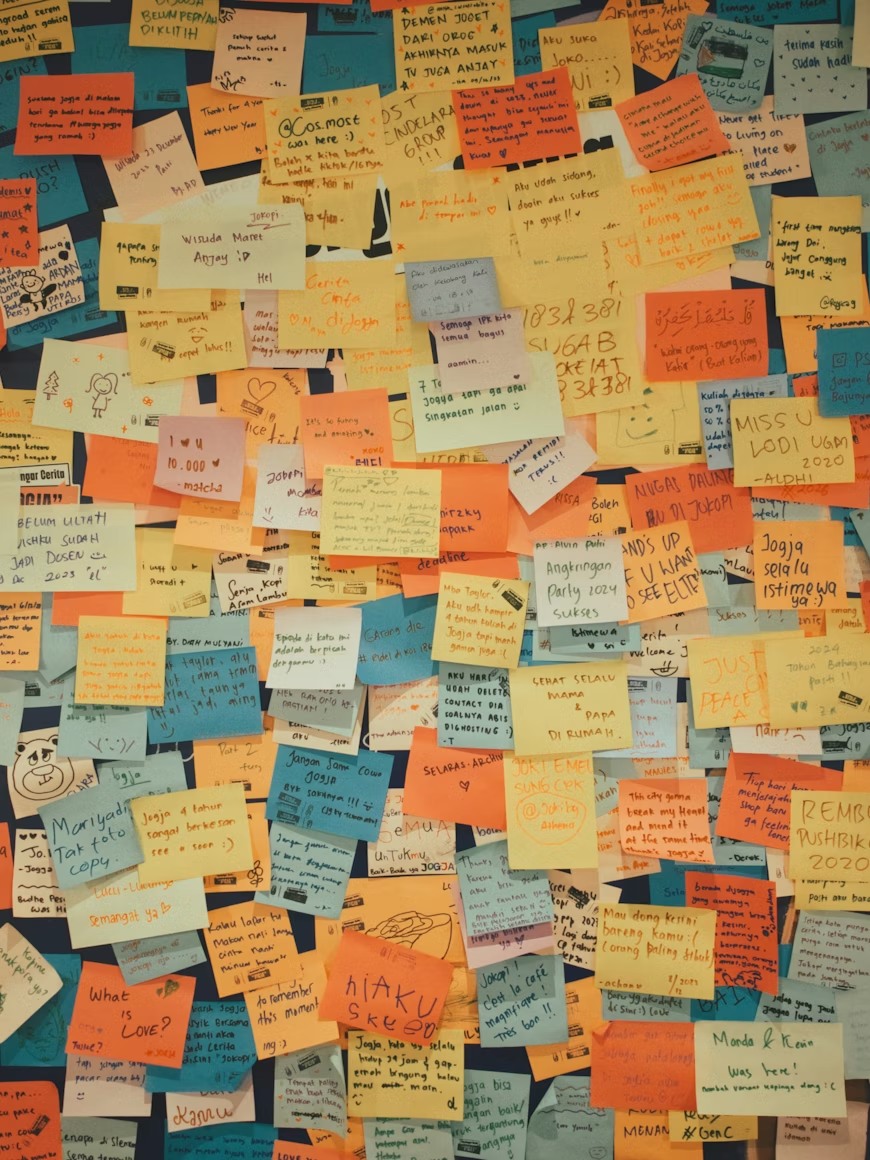
Most teams ship, celebrate (or not), and move on. The sprint ends, the project ships, and everyone jumps to the next thing. Retros break that pattern. A short, structured look back turns "we will do better next time" into actual changes — and gives people a place to say what went wrong without it feeling like complaining.
What retros actually do
Skip them and you repeat the same mistakes. The deployment that broke prod? The sprint where scope crept? The meeting that ran 45 minutes too long? Nobody talks about it, so nobody fixes it. A retro gives everyone a slot to say what worked, what did not, and what to try differently. No blame — just a shared picture of what happened and what to change.
- LearningYou capture what actually happened and turn it into actionable changes instead of vague “we’ll do better next time.”
- Psychological safetyWhen feedback gets used, people speak up earlier. Problems surface before they blow up.
- MomentumSmall tweaks compound. A retro every sprint beats a big "lessons learned" doc once a year.
Why teams skip them
Everyone agrees retros are useful. Then the sprint ends, someone's on holiday, and the retro slides. Or it happens but the notes live in a doc nobody opens. Or the actions get captured and never surface again. The format is not the problem — it is that retros need a home. Somewhere to set them up quickly, capture notes in real time, and keep actions visible until they are done.
A place for retros that sticks
In Manager Toolkit you create a retro in seconds. Pick your columns — What went well, What did not, Actions, whatever fits — and share a link. Your team adds notes in real time, even if they are remote or joining async. Notes and actions live in the same place as your catchups and meetings, so you can see what was agreed and what is still open without hunting through docs.
Run one after a tough release, at the end of a sprint, or whenever something big wrapped. It does not have to be formal. The point is to close the loop: a short conversation that turns "what happened" into "what we will do differently" — and to make that conversation easy enough that it actually happens.